Project Background

Project Background

Project Background

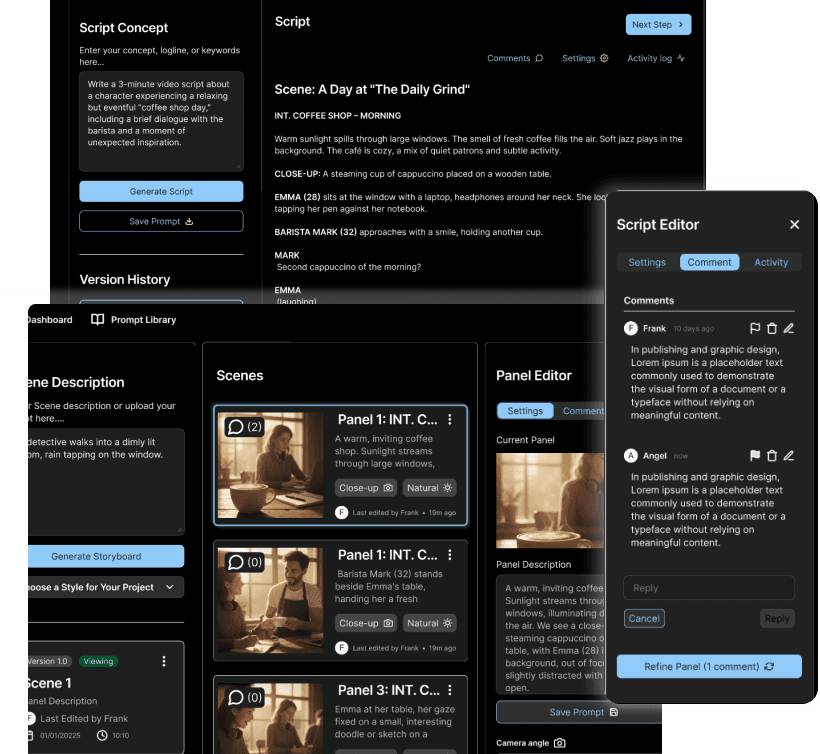
ASPO is an AI-driven platform designed to simplify the early stages of media production — from scriptwriting to video generation — all in one collaborative space.
The goal was to create a unified experience where creative teams could generate, refine, and collaborate seamlessly without switching between multiple tools.

ASPO is an AI-driven platform designed to simplify the early stages of media production — from scriptwriting to video generation — all in one collaborative space.
The goal was to create a unified experience where creative teams could generate, refine, and collaborate seamlessly without switching between multiple tools.

Problem Statement

Problem Statement

Before ASPO, teams relied on multiple apps — like Freepik for visuals and other tools for scripting — creating fragmented workflows.
Feedback was scattered across email threads and manual follow-ups, wasting time and creating confusion.
The client needed one AI-powered workspace where all creative stages and feedback could happen together.

Before ASPO, teams relied on multiple apps — like Freepik for visuals and other tools for scripting — creating fragmented workflows.
Feedback was scattered across email threads and manual follow-ups, wasting time and creating confusion.
The client needed one AI-powered workspace where all creative stages and feedback could happen together.

Impact at a Glance

Impact at a Glance

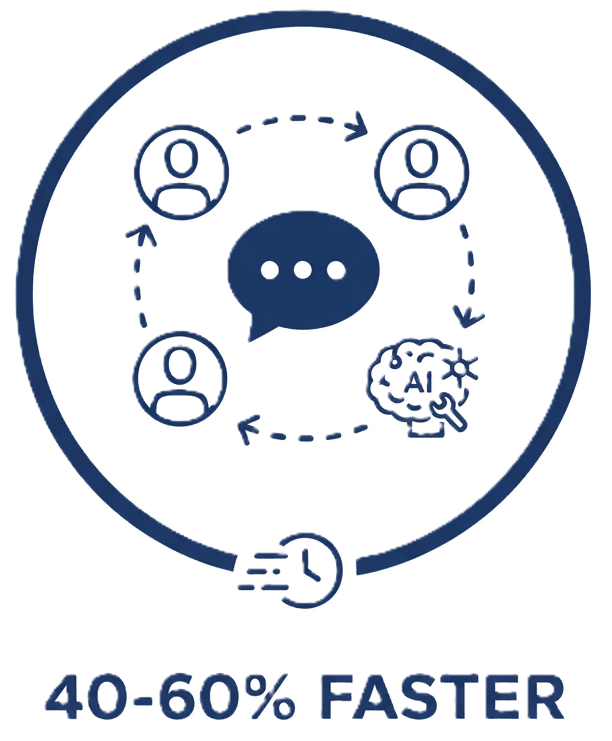
40–60% faster team collaboration through real-time commenting + AI-assisted refinement

40–60% faster team collaboration through real-time commenting + AI-assisted refinement

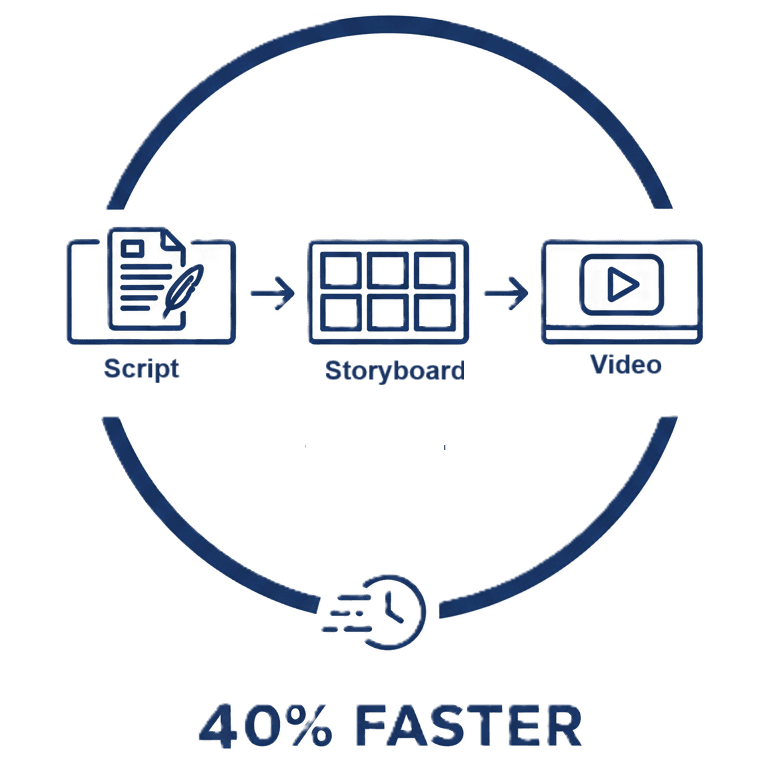
40% faster content creation from concept to video using an integrated Script → Storyboard → Video workflow

40% faster content creation from concept to video using an integrated Script → Storyboard → Video workflow

Research & Insights

Research & Insights

Research & Insights

Competitive + Hands-On Analysis

Competitive + Hands-On Analysis

I tested tools like Freepik AI, Runway, Pika, and storyboarding apps.
Insights:

  • Tools work individually, not holistically

  • None supported script → storyboard → panel → video in one flow

  • No collaboration or commenting

  • Too technical for the client’s team

  • Users wanted a simple, guided process

I tested tools like Freepik AI, Runway, Pika, and storyboarding apps.
Insights:

  • Tools work individually, not holistically

  • None supported script → storyboard → panel → video in one flow

  • No collaboration or commenting

  • Too technical for the client’s team

  • Users wanted a simple, guided process

User Observation

User Observation

Watched client team use their preferred tool (Freepik AI).
Findings:

  • They struggled with inconsistent results

  • They preferred AI-guided defaults

  • They didn’t want to decide technical settings

Watched client team use their preferred tool (Freepik AI).
Findings:

  • They struggled with inconsistent results

  • They preferred AI-guided defaults

  • They didn’t want to decide technical settings

Design Goals

Design Goals

Design Goals

Unify all creative stages in one app

Unify all creative stages in one app

Avoid technical overwhelm through clean modular UI

Avoid technical overwhelm through clean modular UI

Enable seamless collaboration and real-time feedback

Enable seamless collaboration and real-time feedback

Process

Process

Process

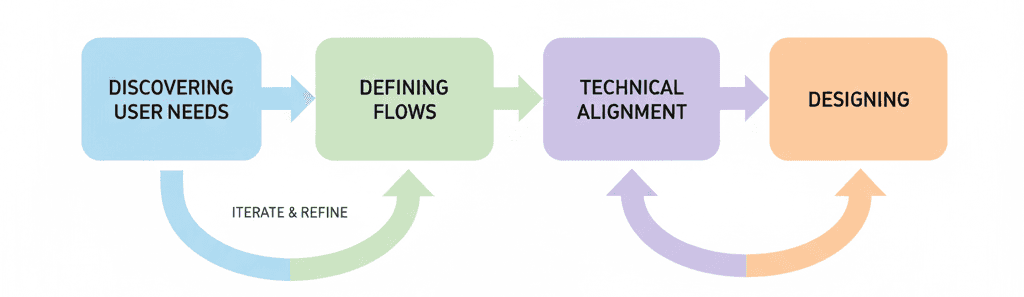
I took an iterative approach — discovering user needs, defining flows, and designing with continuous technical alignment.
Collaboration with the developer was essential to ensure Gemini and Imagen APIs were implemented smoothly and realistically.

I took an iterative approach — discovering user needs, defining flows, and designing with continuous technical alignment.
Collaboration with the developer was essential to ensure Gemini and Imagen APIs were implemented smoothly and realistically.

Modular but Sequential Flows

Modular but Sequential Flows

Modular but Sequential Flows

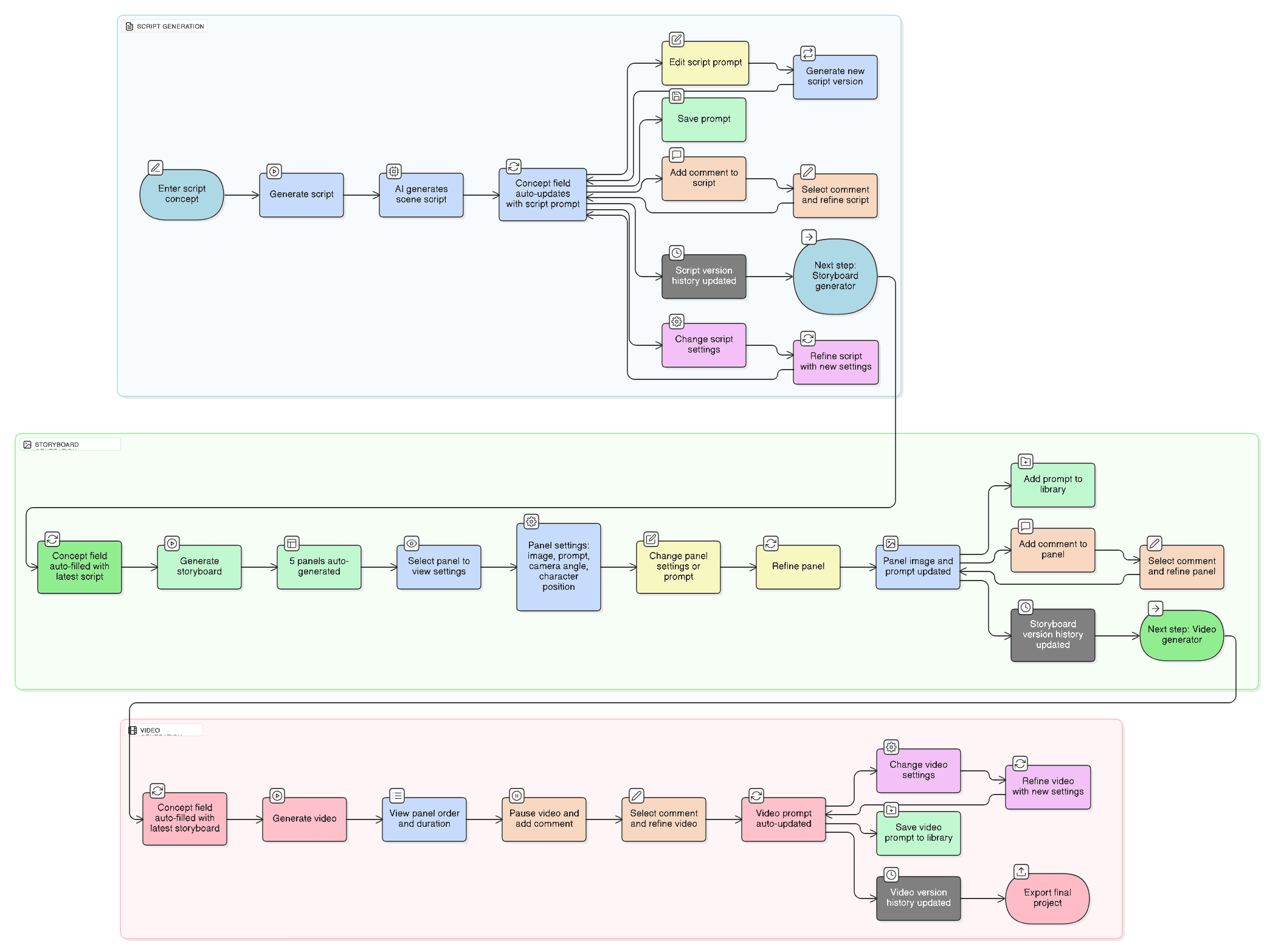
To reduce cognitive load, users move through ASPO step by step — starting with script generation and then progressing to storyboard and video creation. This guided flow keeps the experience focused and prevents users from feeling overwhelmed. Throughout the process, I collaborated closely with developers to align the flows with Gemini and Imagen’s technical capabilities, ensuring the experience remained both simple and feasible.

To reduce cognitive load, users move through ASPO step by step — starting with script generation and then progressing to storyboard and video creation. This guided flow keeps the experience focused and prevents users from feeling overwhelmed. Throughout the process, I collaborated closely with developers to align the flows with Gemini and Imagen’s technical capabilities, ensuring the experience remained both simple and feasible.

Key Design Decisions

Key Design Decisions

Key Design Decisions

One Script = One Scene (MVP)

One Script = One Scene (MVP)

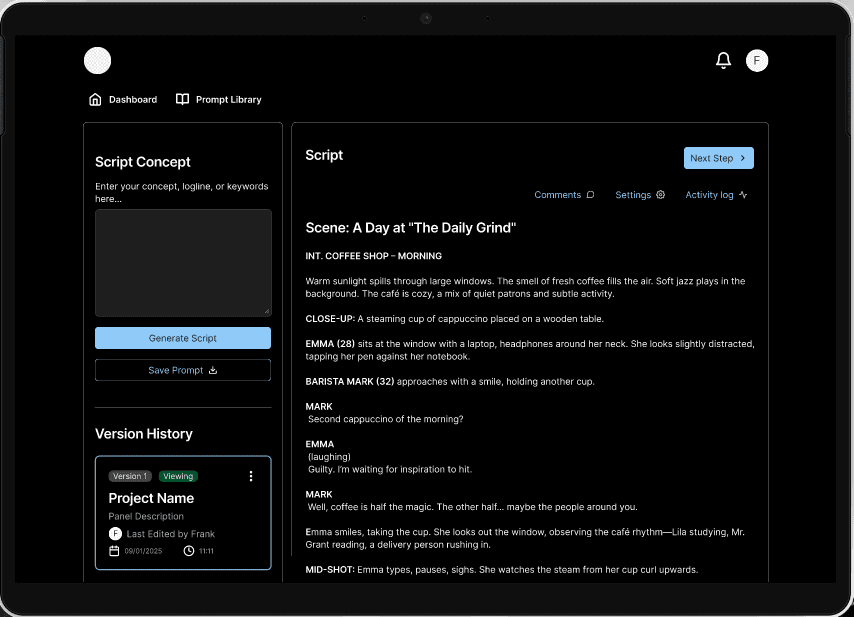
To reduce complexity, the script became a single scene.
This enabled a clear linear workflow:
Script → Storyboard → Panels → Video

To reduce complexity, the script became a single scene.
This enabled a clear linear workflow:
Script → Storyboard → Panels → Video

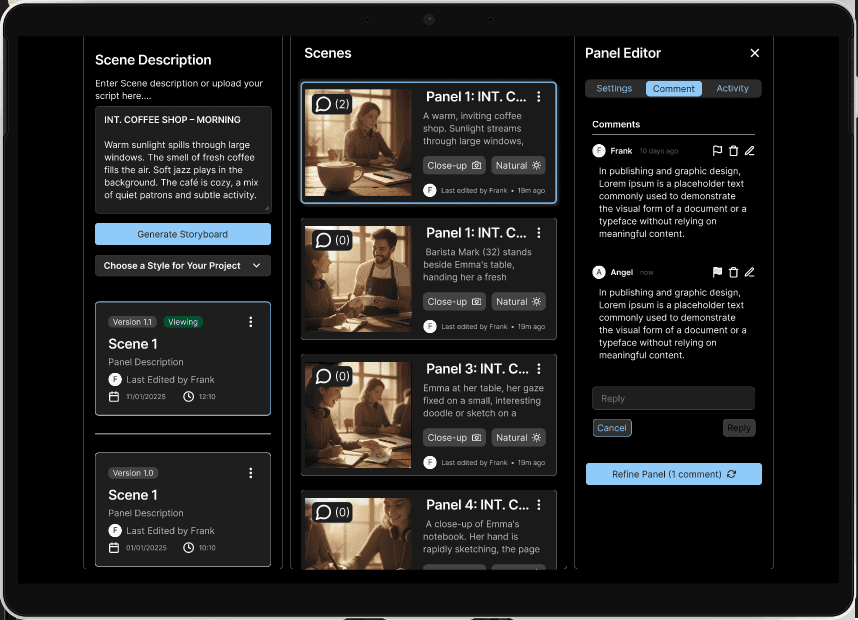
Default Auto-Generated Storyboard

Default Auto-Generated Storyboard

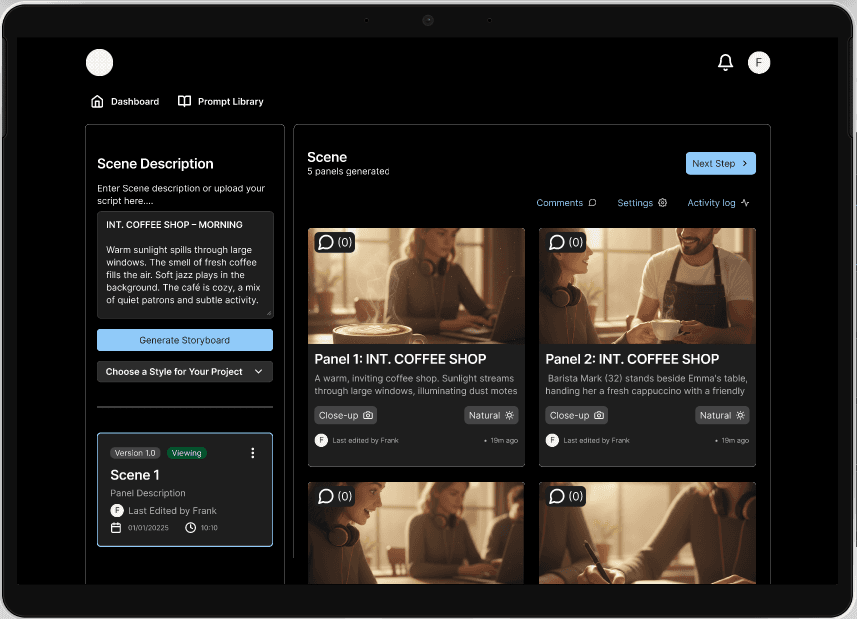
When generating a storyboard:

  • ASPO auto-created 5 panels

  • Users could add/remove panels

  • This removed user confusion about “how many panels do I need?”

When generating a storyboard:

  • ASPO auto-created 5 panels

  • Users could add/remove panels

  • This removed user confusion about “how many panels do I need?”

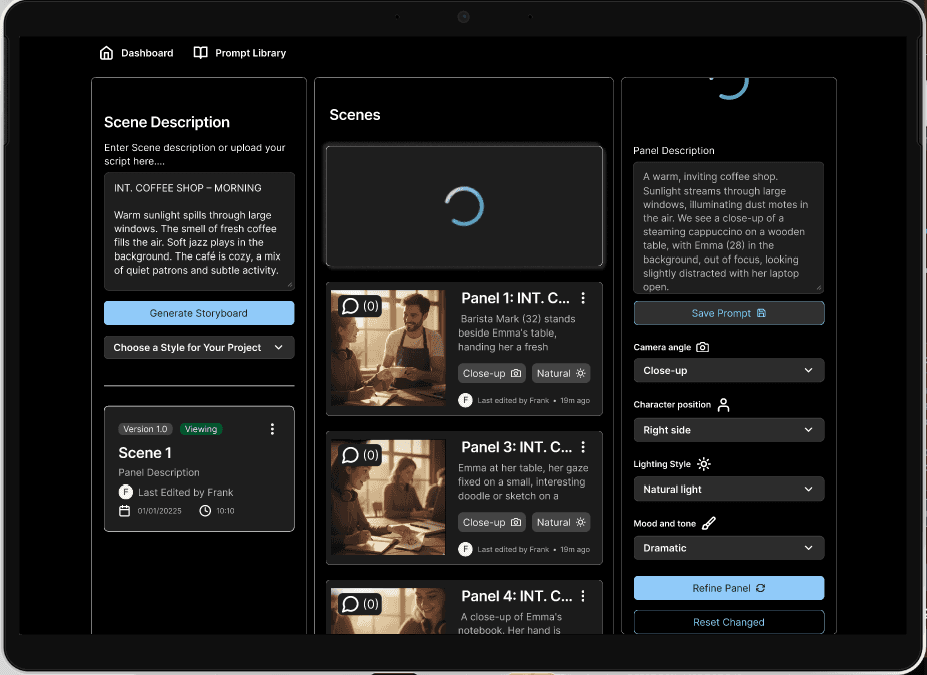
Panel Refinement (Two Paths)

Panel Refinement (Two Paths)

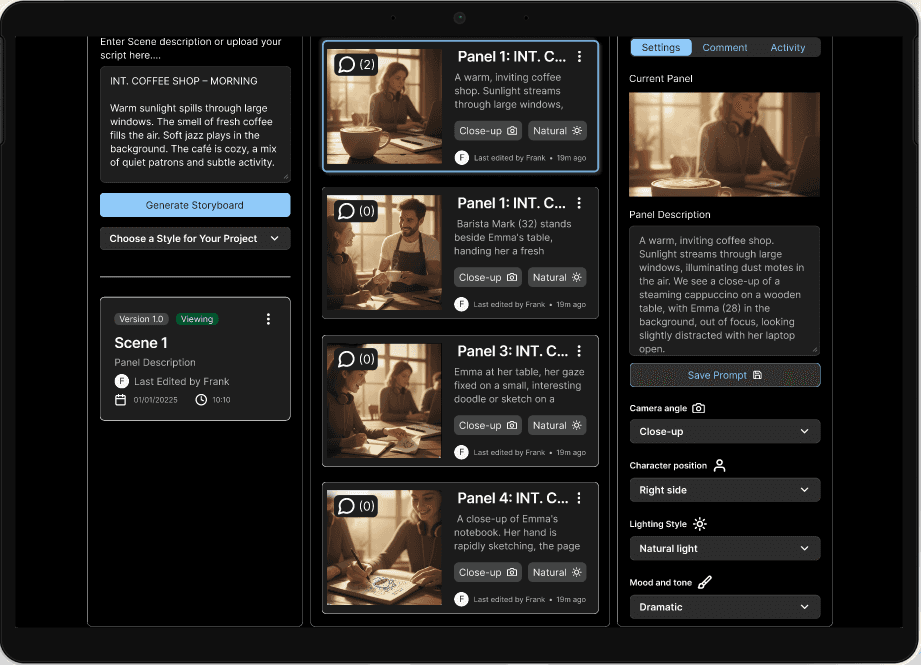
Users could refine panels:

  • Manually (edit description + settings → regenerate)

  • Through comments (select comments → regenerate)

Refining one panel creates a new version, without changing others.

Users could refine panels:

  • Manually (edit description + settings → regenerate)

  • Through comments (select comments → regenerate)

Refining one panel creates a new version, without changing others.

Hidden AI Complexity

Hidden AI Complexity

The “Refine Panel” button combined:

  • Saving changes

  • Generating new text

  • Creating new image

  • Storing version history

One action → multiple backend processes.

The “Refine Panel” button combined:

  • Saving changes

  • Generating new text

  • Creating new image

  • Storing version history

One action → multiple backend processes.

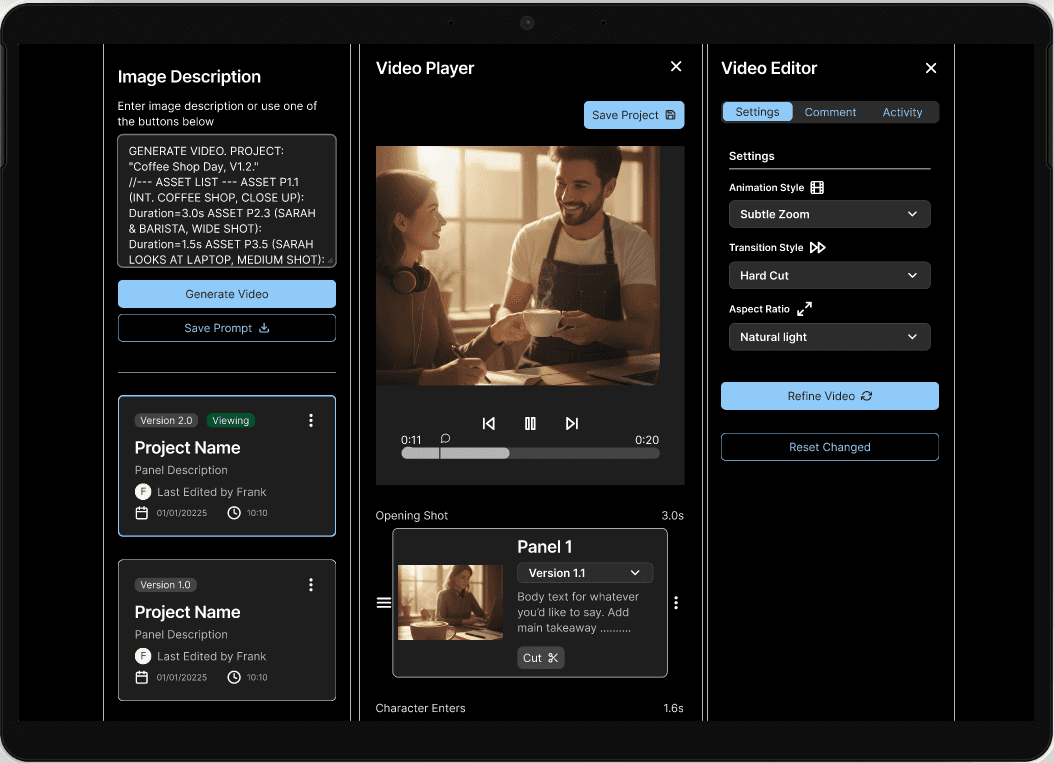
Smart Prompt Auto-Update

Smart Prompt Auto-Update

Each edit—settings change, panel reorder, or comment refinement—automatically:

  • Rewrites the technical assembly prompt

  • Syncs shot order, durations, transitions, and effects

  • Maintains backward traceability

  • Updates the concept input field with the latest technical prompt

No manual prompt rewriting → faster, cleaner iteration..
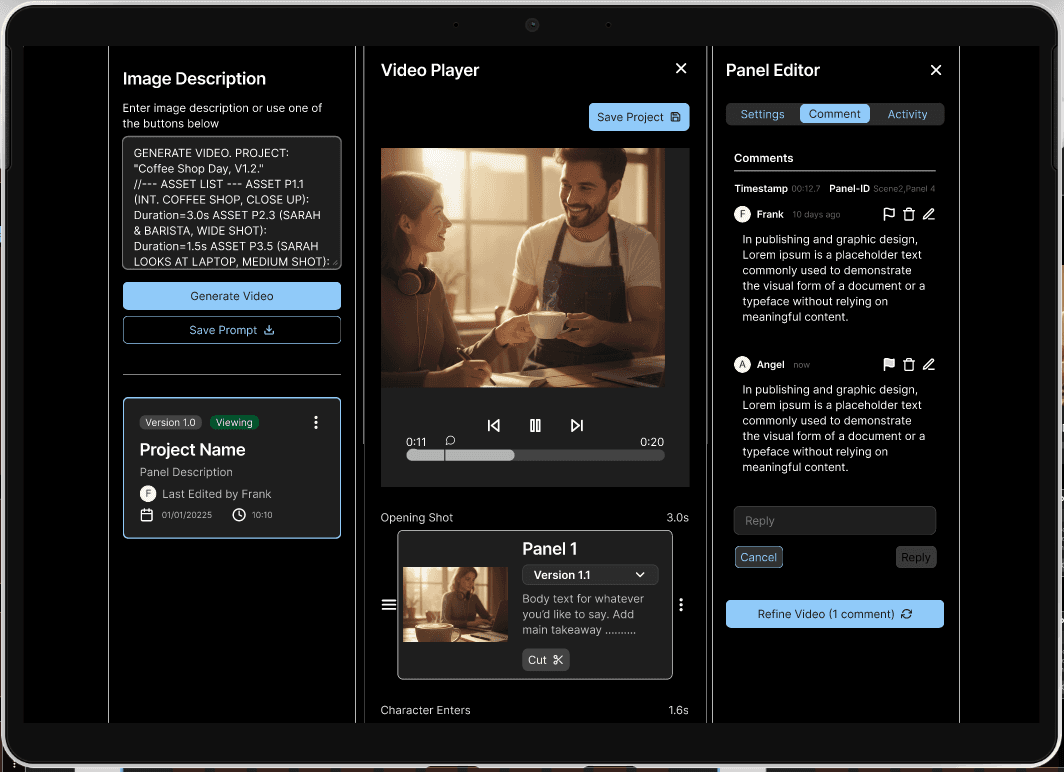
Frame-Accurate Feedback

Frame-Accurate Feedback

When the user pauses the video and adds a comment:

  • ASPO stores the timestamp

  • Displays feedback markers on the timeline

  • Applies the selected comment to regenerate the whole video

  • Creates a new version linked to that feedback
    Precise feedback → accurate refinement → cleaner collaboration
Design Challenges

Design Challenges

Design Challenges

Tight Timeline with Limited Resources

Challenge: Very limited time with only one designer and one developer.
Solution: Focused on essential flows and used a modular structure (Script → Storyboard → Video) to move fast and stay aligned.

Understanding User Needs Despite Ambiguous Requirements

Challenge: PRD didn’t reflect actual workflows or expectations.
Solution: Did quick research and observed the team using existing tools, identifying the need for simplicity and an all-in-one AI workflow.

Helping the Client Visualize the Product Early

Challenge: Due to client's limited technical background, Low-fi designs would cause confusion and slowe decision-making.
Solution: Switched to hi-fidelity wireframes, enabling instant clarity and rapid approvals.

Aligning Client Vision with Technical Feasibility

Challenge: The client wanted highly flexible creation tools, but the developer needed a design that worked within Gemini and Imagen’s limitations.
Solution: designed modular screens (Script → Storyboard → Video) and collaborated closely with the developer to keep technical feasibility.

ASPO – AI-Powered Studio/Production Orchestrator (MVP)

Simplifying creative workflows with AI-driven production and seamless team collaboration

▪UX/UI design ▪ Freelance ▪ Contract

Timeline: 2 weeks (MVP design sprint)

Team: 1 Designer (me), 1 Developer, Client (Product Owner)

Challenge : How might we create a unified, intuitive platform that allows creative teams to generate and refine scripts, images, and videos seamlessly using AI?

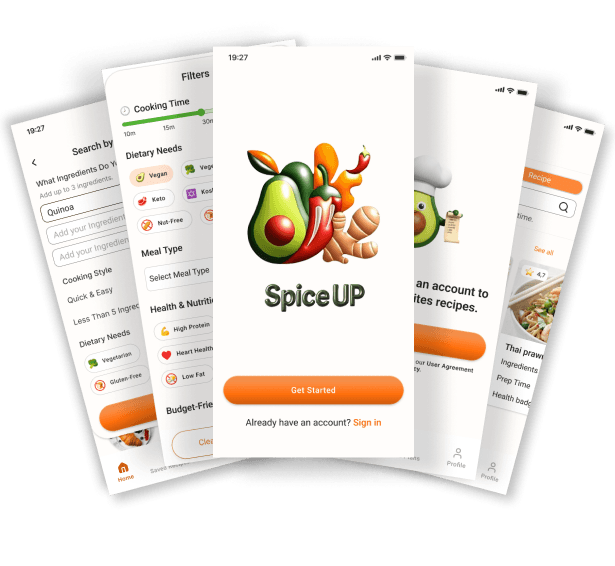
Spice Up Mokup
Spice Up Mokup

Create a free website with Framer, the website builder loved by startups, designers and agencies.